"What Story Sells?"
How Tourism Shapes Historical Memory — KS3 Lesson Plan (50 minutes)
What you need to know before teaching this lesson:
Hashima Island is a former coal mine off Nagasaki, Japan, now a UNESCO World Heritage Site. Tourism sources present the island as an exciting ruin to visit — but they consistently omit the history of forced labour during World War II. You do not need Japan expertise to teach this lesson. The analytical framework — examining what sources include, exclude, and why — is one you already use with British examples.
For full background, see the Teacher Guidance document.
At a Glance
| Key Stage | KS3 (Ages 11–14) |
|---|---|
| Duration | 50 minutes |
| Sources used | Source Sheet: B, C, D, I, L |
| Curriculum link | Edexcel KS3: "Interpreting the British Empire: how has it been commemorated and contested?" |
| Key concepts | Interpretation, significance, evidence |
| Prior knowledge | None about Japan required |
Learning Objectives
By the end of this lesson, students will be able to:
- Identify what information tourism sources include and exclude about a historical site
- Explain how the way a place is presented to visitors shapes what people understand about its history
- Compare how different types of tourism source (government, commercial, travel guide) frame the same place differently
Curriculum connections
Edexcel KS3: "Interpreting the British Empire: how has it been commemorated and contested?" — Hashima provides a non-British parallel case. Students explore how a contested industrial site is presented to visitors, developing skills they can transfer to British examples.
National Curriculum KS3 History: "Understand historical concepts such as continuity and change, cause and consequence, similarity, difference and significance, and use them to make connections, draw contrasts, analyse trends, frame historically-valid questions and create their own structured accounts, including written narratives and analyses."
Second-order concepts: Interpretation, significance, evidence.
Cross-curricular: Digital literacy, media literacy, geography (place and identity).
Lesson Plan
Starter: What is this place? (5 minutes)
Project the photograph below (or display it fullscreen from this page). Do not name the island.
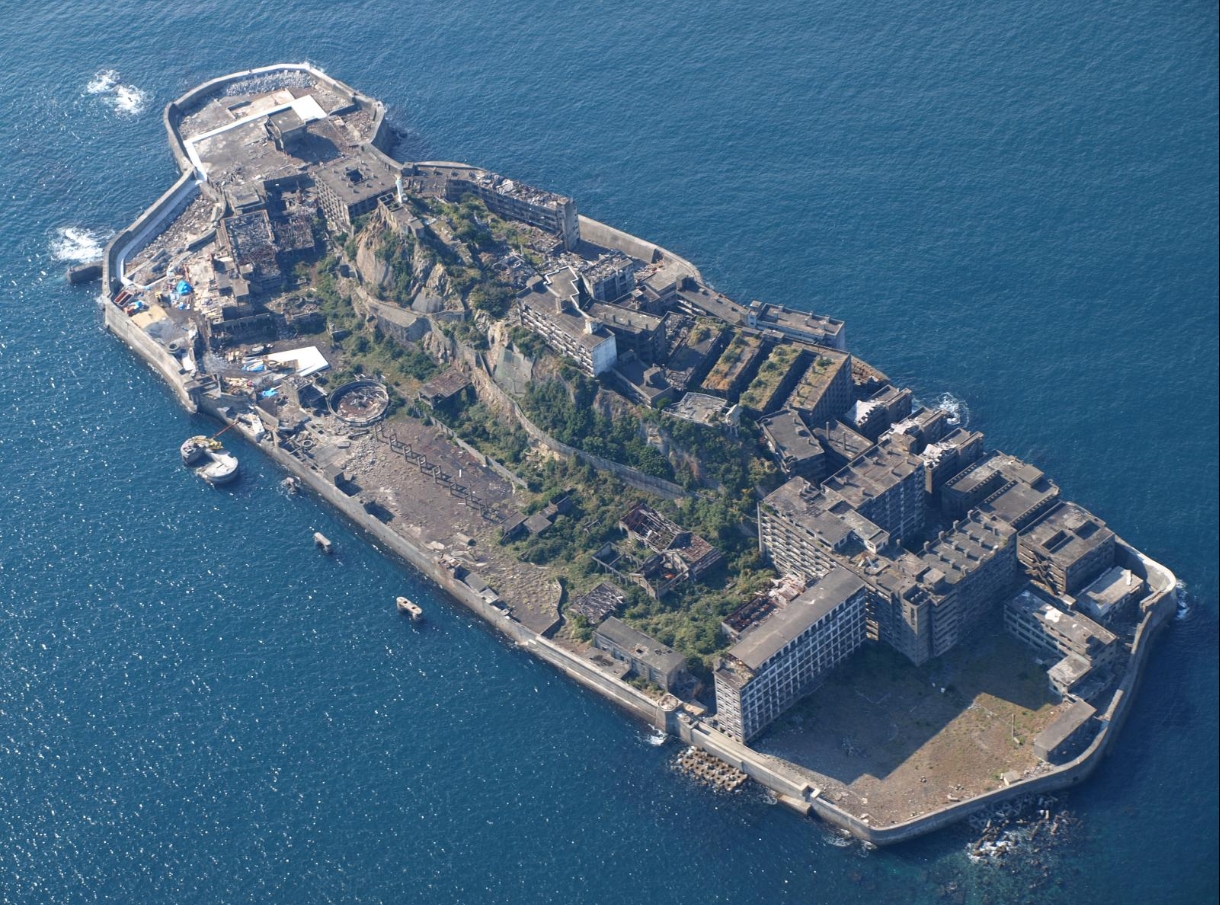
Ask students: What do you think this place is? What might have happened here?
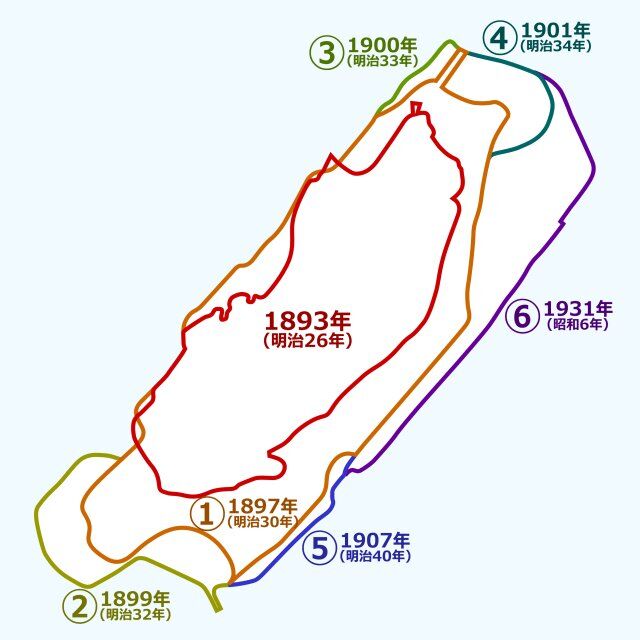
Take 3–4 responses. Then reveal: This is Hashima Island, also called "Battleship Island," off the coast of Nagasaki, Japan. It was a coal mining community where over 5,000 people lived on an island smaller than most school playing fields. It is now a UNESCO World Heritage Site. Today we are going to look at how this island is sold to visitors — and what that selling tells us about how history works.
Main Activity: The Comparison Grid (30 minutes)
Phase 1 — Reading the sources (15 minutes)
Distribute the comparison grid (download PDF · supported version). Organise students into pairs. Assign each pair one source to read first (ensuring all five sources are covered across the class). Each pair reads their assigned source and completes their row of the grid:
| Source B: Japan Tourism | Source C: Nagasaki City | Source D: GaijinPot | Source I: Yamasa Shipping | Source L: Digital Museum | |
|---|---|---|---|---|---|
| Who made this source? | |||||
| Who is it for? | |||||
| What words does it use to describe Hashima? (copy 2–3 key words or phrases) | |||||
| What period of history does it focus on? | |||||
| Does it mention forced labour? (Yes/No — if yes, what does it say?) | |||||
| What does it want the reader to DO? |
Phase 2 — Sharing and comparing (10 minutes)
Pairs report back. Teacher fills in a shared grid on the whiteboard as each pair reports.
What students should discover:
Sources B, C, I, and L do not mention forced labour at all. Source D mentions it in one paragraph but then advises visitors not to ask about it. All five sources want the reader to visit, book, or buy something. The Digital Museum (L) recreates the island "in its heyday" — but whose heyday? The tour operator (I) controls what visitors can physically see and hear.
Language discussion prompt (optional, 2 minutes): Ask students: "How many of these five sources were originally written in Japanese?" (Answer: Sources B, I, and L are primarily Japanese-language sites with limited English versions; Sources C and D are English-language.) Follow up: "What does that tell us about who this conversation is really for?" This connects to the lesson's core theme — that the tourism narrative about Hashima is shaped by choices about audience, and language is one of those choices.
Phase 3 — The key question (5 minutes)
Teacher poses: If a tourist visits Hashima using only these five sources to prepare, what would they learn about the island's history — and what would they never find out?
Brief pair discussion, then 2–3 responses shared with class.
Plenary: So what? (10 minutes)
Teacher introduces the concept of interpretive framing: the idea that how a place is presented determines what people understand about it. This is not the same as lying — none of these sources say anything false. They simply choose what to include and what to leave out.
Ask students to write a one-sentence answer to this question in their books:
"How can a source be accurate but still misleading?"
If time allows, project Source A (official heritage website) briefly and ask: This is the official heritage website for Hashima's World Heritage status. Based on what you've learned today, what would you expect to find on this page — and what would you expect to be missing?
Assessment guidance: What does a good answer look like?
The plenary question — "How can a source be accurate but still misleading?" — can be assessed at three levels:
Emerging: Student identifies that a source can leave information out. May give a general statement without specific reference to the lesson's sources. Example: "A source can be accurate but misleading because it doesn't tell you everything."
Developing: Student explains that selecting what to include and exclude shapes the reader's understanding, with reference to at least one specific source from the lesson. Example: "Source B is accurate about what Hashima looks like today, but it's misleading because it doesn't mention the forced labour, so a tourist would think the island was just an interesting ruin."
Secure: Student distinguishes between factual accuracy and interpretive completeness, recognising that the framing of information (not just its presence or absence) shapes understanding. May use the term "interpretive framing" introduced in the plenary. Example: "All five sources are factually accurate — none of them lie. But they are misleading because they frame Hashima as an exciting tourist destination or a technological achievement, which makes the forced labour history seem unimportant or irrelevant. The accuracy makes the misleading harder to spot because you can't point to anything that's actually wrong."
Extension / Homework
Option A (Creative): Write a 100-word description of Hashima for a tourism website that is accurate but tells a completely different story from Sources B–D. What would you include that they left out?
Option B (Analytical): Source D says "Tour guides are normally reluctant to address this issue so it's best not to push it." Write a paragraph explaining what this sentence reveals about how Hashima's history is managed for visitors. Use the word "silence" in your answer.
Differentiation
Support: Pre-complete the "Who made this source?" row of the grid. Reduce to three sources (B, D, L) instead of five. Provide sentence starters for the plenary writing task: "A source can be accurate but misleading because..."
Stretch: After Phase 2, ask students to rank the five sources from "most informative" to "least informative" and justify their ranking. Challenge: is "most informative" the same as "most useful for a historian"?
Assessment opportunities
Formative: Pair discussion during Phase 1 and Phase 3; quality of grid completion.
Written: Plenary one-sentence answer (collectable exit ticket).
Extended: Homework options A or B.
SEND and accessibility considerations
Dyslexia: The comparison grid uses a structured table format that supports visual organisation. If printing, use cream paper and ensure grid cells are large enough for handwriting. The supported version of the grid (PDF) pre-fills the "Who made this source?" row and reduces the number of sources from five to three.
EAL: The lesson requires minimal specialised vocabulary. Pre-teach "UNESCO," "World Heritage Site," and "forced labour." The starter image is a strong visual hook that engages students before reading begins.
ADHD / executive function: The lesson alternates between paired reading (Phase 1), class reporting (Phase 2), and individual writing (plenary). Display a visual timetable with timings. The grid provides external structure for students who struggle to organise their own notes.
Motor accessibility: If students access sources on devices, the downloadable source pack (PDF) avoids the need to navigate multiple websites.
Teaching this as part of the mini-unit?
This is Lesson 1 of the three-lesson mini-unit. At the end of the lesson, preview the next session: "Today we discovered that tourism sources leave out the forced labour history. Next lesson, we're going to find out who decided to leave it out — and why."
Downloads
Download this lesson's resources.
Lesson Slides: "What Story Sells?" PPTX
Student Worksheet: Comparison Grid PDF
Student Worksheet: Comparison Grid — Supported PDF
Source Sheet: 14 Digital Sources PDF
KS3 Source Pack: Key Excerpts for Offline Use PDF
Last updated: March 2026
Lesson Plans