For Secondary History Teachers
Curriculum-aligned resources for KS3 and GCSE history
Last updated: March 2026
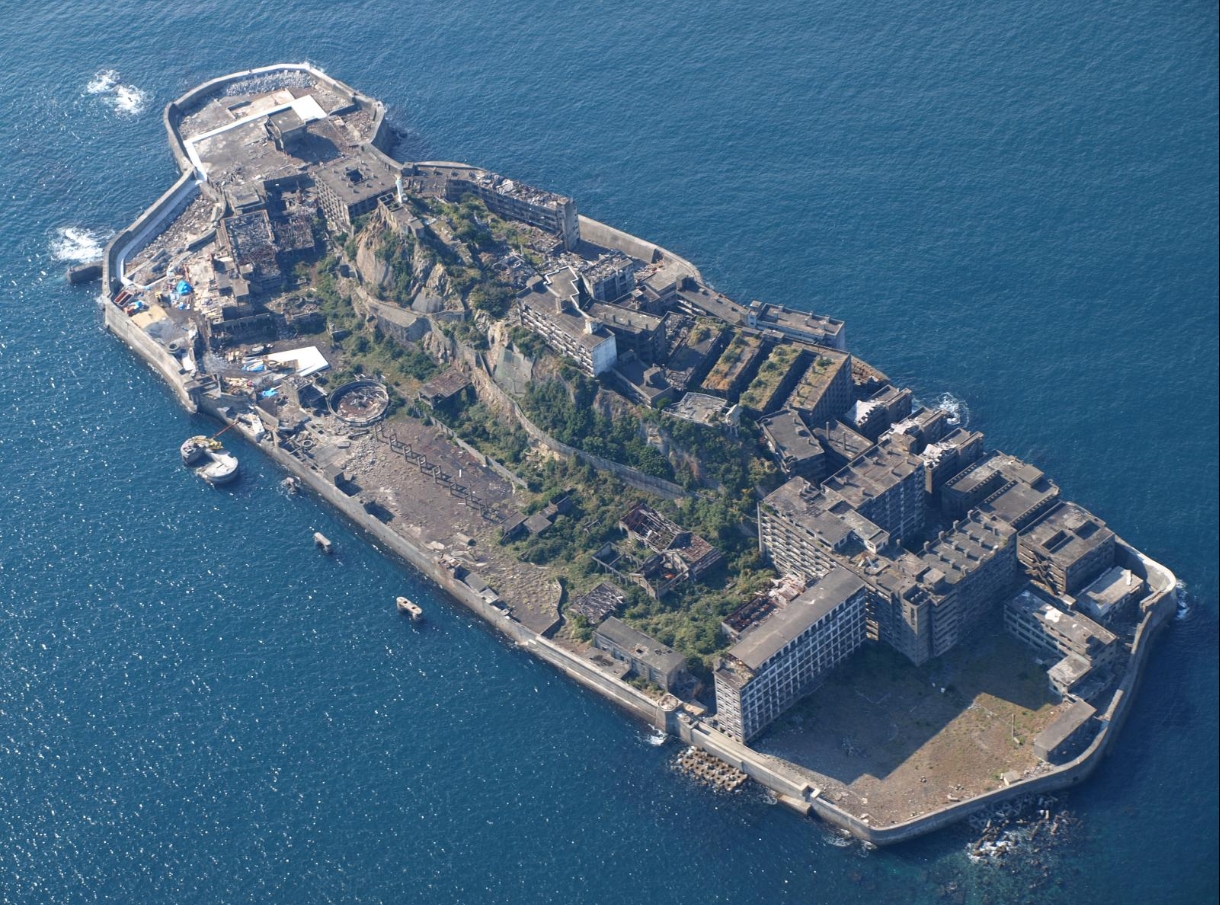
Hashima Island is a case study in contested heritage — a UNESCO World Heritage Site where the question of who gets to tell the story remains unresolved. These resources use real digital sources to develop source analysis, interpretation, and critical thinking skills your students can transfer to any exam board question.
Download the KS3 lesson plan and source sheet — you can teach a 50-minute lesson tomorrow with no Japan expertise required.
Need the GCSE version? GCSE Lesson Plan (PDF) · Want background first? Teacher Guidance (8-minute read)
Curriculum Connections
| Exam Board / Key Stage | Specification | Connection |
|---|---|---|
| AQA GCSE | Britain: Migration, Empires and the People (Paper 2A/C) | Industrialisation, experience of empire, attitudes to empire — from the perspective of those subjected to imperial labour systems |
| Edexcel KS3 | "Interpreting the British Empire: how has it been commemorated and contested?" | Non-British parallel case for analysing how industrial heritage is commemorated and contested |
| All exam boards | Second-order concepts | Significance, interpretation, causation, evidence — using GCSE-style question frames |
Resources
Digital Source Investigation
14 curated digital sources about Hashima Island for classroom source analysis. Includes teacher notes, suggested groupings, and curriculum connections.
LessonsLesson Plans
KS3 and GCSE plans plus a three-lesson mini-unit with Lesson 3 on soft gatekeeping. Differentiated with extension tasks. AQA, Edexcel, and OCR aligned.
GuidanceTeaching Hashima in Your Classroom
Background knowledge, curriculum connections, and classroom management advice for non-specialist teachers. 8–10 minute read.
HandoutsStudent Handouts
Three classroom-ready texts at Year 9 reading level: the island's history, the UNESCO debate, and the unreleased VR project. 1–2 pages each.
Languages and Hashima
The sources in these lessons are published in Japanese, Korean, and English. The most consequential heritage narratives about Hashima — the ones that shape government policy, tourism practices, and international disputes — are produced in Japanese for Japanese audiences. English-language access is always mediated: translated, simplified, or selectively presented.
This is part of the story. If your students find it frustrating that they can't read a source in its original language, that frustration is itself a lesson in how language shapes access to contested histories.
Students interested in East Asian languages can study Japanese, Korean, or Chinese at degree level. SOAS University of London offers specialist programmes including combined degrees with History. Search UCAS for programmes at universities across the UK.
Downloadable Resources
All resources are available for printing or sharing with colleagues.
Teaching Tools
- Teacher Guidance PDF 68 KB
- Source Sheet: 14 Digital Sources PDF 132 KB
- KS3 Source Pack: Key Excerpts PDF 76 KB
- GCSE Source Pack: Key Excerpts PDF 76 KB
- Lesson Plan — KS3: "What Story Sells?" PDF 72 KB
- Lesson Plan — GCSE: "Who Gets to Tell the Story?" PDF 72 KB
Slide Decks
Student Handouts
- Handout A: A Short History PDF 72 KB
- Handout B: The UNESCO Debate PDF 72 KB
- Handout C: The Project That Couldn't Be Released PDF 72 KB
Student Worksheets
Skills This Material Develops
The resources above develop skills that exam boards assess using language like:
| Skill | Exam board language |
|---|---|
| Source analysis | "How useful is Source A for an enquiry into…?" |
| Significance | "Explain the significance of…" |
| Interpretation | "How far do you agree with Interpretation 1 about…?" |
| Causation | "Explain why… / What were the main reasons for…?" |
| Evidence evaluation | "How convincing is the evidence in Source B?" |
Curriculum intent statement (for department leads and Ofsted deep dives)
This unit contributes to the KS3/4 history curriculum by developing students' ability to evaluate competing historical interpretations using real-world digital sources. It addresses the national curriculum requirement for students to engage with diverse historical perspectives and non-British case studies, providing analytical distance that allows students to practise evaluating contested narratives before applying the same skills to more emotionally proximate British examples. The unit develops the second-order concepts of interpretation, significance, and evidence that are assessed at GCSE across all major exam boards (AQA, Edexcel, OCR). The three-lesson progression — from surface-level source comparison, through institutional analysis, to structural critique of how silence is produced — ensures students build increasingly sophisticated analytical skills. These transfer directly to exam contexts and to students' wider understanding of how knowledge about the past is produced, managed, and contested. No specialist knowledge of Japan is required to teach this material. Full teacher guidance, lesson plans, slides, worksheets, and source packs are provided.
The Core Sequence
The lesson plans and source sheets above are drawn from a nine-module research sequence that tells the full story of the HashimaXR project. You don't need to read all nine to teach effectively — but the modules marked ★ Recommended will give you the background knowledge to handle student questions confidently.
Each module takes 10–20 minutes to read. View the full sequence →
Show all 9 modules
The HashimaXR Project
What was built and why. Read this first — it frames everything else.
★ Module 01 · RecommendedHashima in Time and Place
The island's history from 1890 to today. Background for Handout A and the source sheet.
Module 02How Heritage Works
What "Authorised Heritage Discourse" means and why it matters for contested sites.
★ Module 03 · RecommendedUNESCO & Contested Heritage
The 2015 inscription and the broken promise. Background for Handout B and the GCSE lesson.
Module 04Labour, Empire, and Evidence
Forced labour at Hashima and what the evidence shows. Useful if students ask difficult questions.
Module 05Digital Histories
How digital reconstructions make historical claims. Relevant to media literacy discussions.
Module 06Reading Institutional Positions
Analytical tools for interpreting official documents. Supports Source N on the source sheet.
Module 07Positions & Perspectives
Regional media discourse and institutional positions on Hashima's contested heritage.
★ Module 08 · RecommendedWhy the Project Stayed Unreleased
Soft gatekeeping and procedural obstruction. Background for Handout C.
CompanionSocial Media and Digital Memory
How platforms shape contested heritage narratives: algorithmic amplification and the testimony wars.
CompanionSongs from the Coalfields
An audio-based learning experience exploring the folk songs that Hashima's workers brought from Japan's coalfield regions.
CompanionTimeline: Hashima in History
Interactive timeline from 1890 to the present—filter by theme, explore enquiry questions, and hear the island's soundscape.
Used these resources in your teaching?
Your feedback helps us improve and provides evidence for the Research Excellence Framework (REF) 2029. No student data is collected — only your professional observations. Complete the Teacher Feedback survey →